Advertisement
Baldi’s 67 Basics


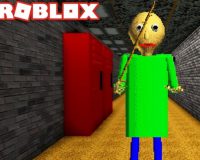
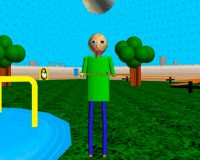
Baldi’s 67 Basics is a modified school-escape game that expands the original concept by significantly increasing the number of required objectives. The player is placed inside a familiar academic building and must move through hallways and classrooms to complete a collection task before exiting. From the start, the scale of the objective changes how the environment is approached. Instead of quick completion, the game encourages extended navigation and careful planning. Familiar locations become repetitive checkpoints that must be revisited multiple times.
Expanded Objective Structure
The central goal in Baldi’s 67 Basics is tied to collecting a much larger set of items than in the standard format. This adjustment alters pacing and forces the player to think in longer routes rather than short loops. Each classroom visit becomes part of a broader path rather than a single step toward completion. Because progress takes longer, mistakes accumulate more easily, and recovery requires rerouting rather than restarting immediately. The expanded count reshapes how time and space are evaluated during play.
Player Actions And Core Loop
The gameplay loop remains simple but extended due to the larger objective. The player repeatedly performs a small set of actions:
- navigating corridors between rooms
- collecting required items and tracking totals
- avoiding moving threats
- adjusting routes after encounters
- locating the exit after completion
These actions repeat many times within a single session, creating a steady rhythm. There are no additional mechanics introduced to compensate for the scale; instead, endurance and consistency become the main factors that influence success.
Threat Presence And Movement Pressure
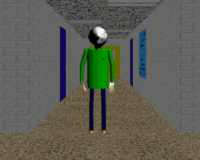
Threats in Baldi’s 67 Basics behave in predictable ways but feel more persistent due to the longer runtime. As the player remains inside the building for extended periods, encounters become more frequent. Sound cues and line-of-sight awareness remain essential, as mistakes compound over time. Backtracking is unavoidable, which increases pressure when navigating already cleared areas that are no longer safe.
As progress continues, the environment begins to feel more constrained. Paths that once seemed optional become necessary, and the margin for error narrows. The player must balance speed with caution, since rushing can lead to dead ends, while hesitation allows threats to close distance. The absence of shortcuts reinforces the need for efficient movement.




































































Advertisement