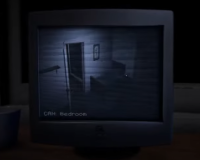
Bathroom Dilemma begins with a character entering a public restroom expecting nothing more than a brief stop. The environment appears ordinary, offering no immediate sign of trouble. The player performs familiar actions—opening doors, approaching sinks, checking stalls. However, the routine quickly breaks down as the restroom begins to behave in unusual ways. What was meant to be a quick pause becomes a contained situation where the player must deal with unexpected developments inside a small, enclosed space.
The First Signs of Trouble
In the early moments, the restroom behaves almost normally. The player explores the area, noticing standard fixtures and a quiet atmosphere. Then small irregularities begin to appear. A tap drips even when fully shut. A door moves slightly despite the absence of wind. A sound bounces off the walls with no clear source. These subtle shifts unsettle the sense of normalcy, suggesting that the space is not as stable as it seems. The simplicity of the location amplifies these changes, making each detail feel significant.
Escalation of Disturbance
As the situation progresses, the restroom becomes increasingly unpredictable. The player encounters disruptions that challenge assumptions about what is safe or familiar. Actions that should work reliably start producing inconsistent outcomes. The space feels controlled yet unstable, forcing the player to stay alert in a location normally associated with privacy and routine.
During a typical session, players may encounter:
- noises that resemble movement behind closed doors,
- reflections that change subtly when viewed twice,
- lights that flicker at irregular intervals,
- doors that lock or unlock themselves,
- sudden shifts in ambient sound.
These moments guide the experience toward confusion and tension.
Themes and Interpretation
Bathroom Dilemma uses its limited setting to explore how a mundane environment can become a source of discomfort when its rules fail. The restroom, a place where people expect predictability, becomes a zone where familiarity cannot be trusted. The game does not rely on complex storytelling; instead, it focuses on how small disturbances can alter perception. This approach turns an everyday location into a space for psychological tension, showing how control can dissolve without warning.
The game concludes with an ambiguous resolution that leaves room for interpretation. The player exits the restroom—or attempts to—carrying uncertainty about what actually occurred. The absence of a clear explanation encourages reflection on whether the events were external, internal, or a combination of both. Bathroom Dilemma succeeds by transforming a routine moment into an experience built on unpredictability, demonstrating how restricted spaces can produce a strong emotional effect through simple disruptions.




































































Advertisement