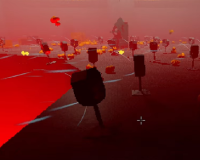
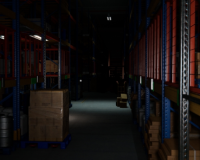
CALLUS is a first-person game focused on exploration within a confined domestic space. The player enters an apartment tied to the protagonist’s past and is given full freedom of movement without instructions or visible objectives. The game does not use traditional mechanics such as combat, inventory, or puzzles. Instead, it relies on repeated navigation through the same rooms to advance the experience. All progression takes place inside a single environment, which remains accessible from the beginning to the end of the session.
Narrative Organization
The narrative structure of CALLUS is indirect and environment-based. There is no spoken dialogue or written exposition explaining the situation. Information is conveyed through changes in space, object placement, and sound. As the player revisits familiar areas, the apartment begins to behave differently, suggesting shifts in memory and perception. The game does not confirm interpretations, leaving the meaning of events open. This approach places responsibility on the player to observe continuity and disruption across repeated visits to the same locations.
Interaction and Progression
Interaction in CALLUS is intentionally limited to basic movement and observation. The player cannot manipulate objects or trigger events manually. Progress occurs when the player enters specific areas or remains within them for a certain amount of time. There are no failure conditions, and the game does not react to incorrect actions. This structure creates a steady pace where progression depends on presence rather than problem-solving.
Core interaction elements include:
- first-person navigation through the apartment
- location-based triggers tied to progression
- repeated movement through unchanged layouts
- visual alterations appearing over time
- audio cues marking transitions
These elements form a closed system that advances without explicit feedback or instruction.
Spatial and Audio Design
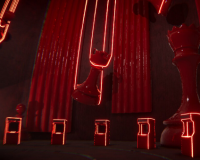
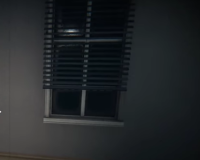
The apartment environment is designed to resemble a standard living space, with recognizable rooms and everyday objects. This familiarity allows small changes to stand out as the game progresses. Lighting is used to signal shifts in narrative state rather than to guide movement. Audio design focuses on ambient sound, with minimal use of music. Changes in sound often accompany environmental transitions, reinforcing progression without direct explanation.
Session Structure
CALLUS is designed to be completed in one continuous play session. There are no save points, branching routes, or alternative endings. While the player is free to move, the sequence of events follows a fixed order that unfolds through exploration. Replay is optional, as the full narrative can be experienced in a single run. The game does not track performance or provide rewards. Overall, CALLUS presents a controlled narrative experience centered on space, repetition, and environmental response, emphasizing observation over interaction.





















































Advertisement