Dead Trust presents a short survival scenario centered around Kevin, who spends the evening alone while his parents are out. The game begins inside a familiar home, allowing the player to adjust to the environment through simple exploration. Nothing seems unusual until a loud explosion occurs outside, shifting the tone of the night. From that moment onward, the player must navigate a series of small but important changes inside the house, each one hinting that danger is moving closer.
Gameplay Flow and Player Role
The player controls Kevin from a first-person perspective, exploring rooms, checking doors, and reacting to sudden cues. Dead Trust keeps its structure straightforward, focusing on navigation rather than complex mechanics. As the situation outside worsens, the player becomes more reliant on sound and limited visibility to sense what is approaching. The house feels increasingly unstable, not because of new locations, but because familiar spaces begin to behave differently. This creates a rhythm in which the player learns to read the environment rather than follow explicit instructions.
Core Features and Structural Elements
The experience in Dead Trust is defined by several central components that guide the player through the short scenario:
- a compact house layout centered on hallways and basic rooms
- movement-based interaction without additional systems
- audio cues that indicate risk or incoming movement
- visual changes tied to the unfolding danger
- a brief, single-session structure built around one escalating event
Together, these features shape a focused survival sequence that relies on perception and timing.
Atmosphere, Sound, and Visual Style
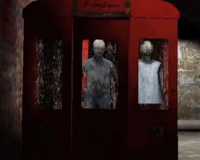
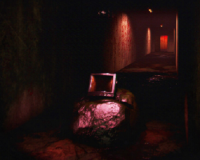
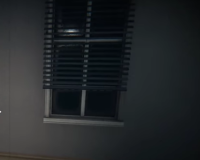
The visual design uses simple textures and restricted lighting, making much of the house appear dim or unclear. This forces the player to approach each corner with caution. Sound design plays a major role in conveying the presence of the threat. The player hears distant rumbles, shifting ambience, and sudden noises that feel connected to the explosion outside. These cues function as the primary indicators of progress, signaling when the situation becomes more urgent. The absence of music keeps the environment quiet, amplifying every small sound.
Dead Trust offers a compact and controlled survival scenario that does not rely on complicated tasks. Instead, the game focuses on atmosphere, timing, and the tension created by an unseen assailant moving through the neighborhood after a destructive event. The short length supports a direct narrative structure without filler. For players who prefer brief horror experiences that emphasize awareness over action, the demo demonstrates how a small setting and simple mechanics can deliver steady pressure. Its clarity and pacing create a complete experience within a limited timeframe.












































Advertisement