Advertisement
Emily Wants To Play


Emily Wants To Play is a first-person horror game that centers on survival through observation and rule-based behavior. The player enters a house late at night and quickly becomes unable to leave, turning the entire experience into a test of endurance. There are no weapons, no combat options, and no alternative escape routes. The only goal is to remain alive until morning while sharing the space with hostile entities that react to specific player actions. The house itself never changes location-wise, but its role shifts as threats appear and disappear over time.
Night Progression And Structure
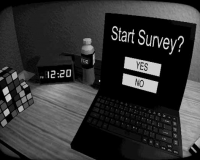
The game is divided into hourly segments that represent the passage of the night. Each hour adds new dangers or combines existing ones, increasing complexity without altering the core mechanics. The clock functions as a progression system, marking advancement rather than skill levels or achievements. As hours pass, the player must remember which rules apply at that moment, since behavior that was safe earlier may become dangerous later. This structure places emphasis on memory and consistency.
Interaction Rules And Survival Logic
Survival in Emily Wants To Play depends on understanding how each threat behaves. Enemies do not act randomly; they follow clear conditions that must be respected. The player must interpret audio cues, visual signals, and timing to decide how to move. During most play sessions, the player repeatedly focuses on:
- recognizing which enemy is currently active
- responding correctly to movement or eye contact rules
- choosing when to stay still or relocate
- navigating rooms while avoiding line of sight
These interactions replace traditional action mechanics and form the core challenge.
Environment Use And Limited Exploration
The house functions as both shelter and danger zone. Rooms may offer temporary safety depending on the hour, but no location remains secure throughout the entire night. Exploration is encouraged early on to learn the layout, but later it becomes more cautious and deliberate. Collectible notes and recordings provide background information, but they do not influence mechanics or outcomes. Environmental interaction is intentionally minimal to keep attention on positioning and awareness.
Failure And Iterative Learning
Failure is frequent and expected. When the player is caught, the game resets to the beginning of the current hour rather than the entire night. This design encourages learning through repetition rather than punishment. Each attempt provides clearer understanding of timing and behavior patterns. Progress is achieved not by unlocking new abilities, but by applying knowledge more accurately with each retry.

































































Advertisement