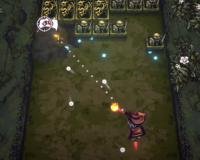
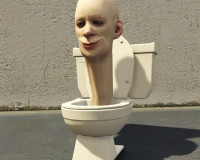
Fever Meme is a game built around constant shifts in structure and interaction, where the player is required to respond to changing rules rather than follow a stable system. From the beginning, the game avoids explaining what it is or how it should be played. Progress depends on paying attention to what is happening on screen and reacting to changes as they occur. Instead of presenting a clear objective, the game advances through a sequence of segments that redefine player expectations repeatedly.
Structure And Flow Of Play
The structure of Fever Meme does not resemble a traditional level-based game. Segments appear one after another without a clear boundary or transition screen. Each segment introduces a temporary logic that may only apply for a short time. The player moves forward not by completing a checklist of goals, but by continuing to interact with the game as it changes form. This approach removes the idea of long-term mastery and replaces it with moment-to-moment awareness.
Interaction And Rule Changes
Interaction in Fever Meme is intentionally unstable. Controls may stay the same while their outcomes change, or new interaction rules may appear without explanation. The game encourages experimentation, as correct actions are rarely obvious on the first attempt. Failure does not stop progress for long and often provides information about how the current segment functions.
Common interaction patterns include:
- Short platform sections with altered behavior
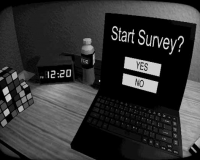
- Interface elements that become interactive objects
- Situations where timing replaces precision
- Moments where inaction produces a response
- Repeated actions that trigger different outcomes
These patterns appear in different forms throughout the game.
Player Awareness And Feedback
Fever Meme communicates with the player through response rather than instruction. Instead of tutorials, the game reacts to player behavior, sometimes referencing previous mistakes or choices. This creates a feedback loop where observation becomes essential. The player learns not by memorizing mechanics, but by noticing how the game reacts to specific actions over time.
Narrative Without Direct Storytelling
The game does not present a traditional story with characters or dialogue-driven plot. Meaning is suggested through repetition, contrast, and self-reference. Segments may recall earlier moments or reuse ideas in altered contexts. Narrative interpretation is left to the player, shaped by how different parts of the game relate to each other rather than by explicit exposition.






























































Advertisement