Advertisement
Flesh, Blood, & Concrete


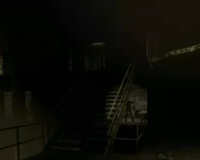
Flesh, Blood, & Concrete centers on Lera, a woman searching for help after her car leaves her stuck during a cold night. A stranger offers assistance and guides her to a tall apartment building standing alone in the dark. What appears to be a temporary refuge gradually becomes a confusing network of rooms and hallways that do not follow consistent architectural rules. As Lera attempts to understand her surroundings, the building reflects her inner state, shaping each area into something tied to memory or emotion rather than physical design.
Beginning of the Exploration
At the start, Lera navigates modest spaces that resemble regular living units. She interacts with various objects left behind by unknown residents, each carrying traces of past stories. The building seems deserted, but subtle details indicate that something is not aligned with reality. Doors may lead to unexpected places, and a corridor that once seemed direct may feel longer when revisited. These early irregularities prepare the player for the deeper shifts in structure that appear later.
Structural Changes and Key Encounters
As the progression continues, the building’s behavior becomes more complex. Lera experiences interruptions in spatial logic that challenge her sense of direction. During this stage, several patterns often emerge:
- rooms that transform after being left and re-entered,
- stairwells or hallways that lead to repeated or altered locations,
- objects that relate to Lera’s past experiences,
- figures that appear briefly before vanishing,
- transitions between areas that lack physical coherence.
These encounters suggest that the building is connected to Lera’s internal conflicts rather than functioning as a normal structure.
Themes and Emotional Process
Flesh, Blood, & Concrete uses these shifts to explore themes of unresolved trauma and the difficulty of facing personal history. The building acts as a container for moments Lera has tried to push aside. Each new area forces her to engage with fragments she avoided. Interactions with Nika highlight the tension between seeking help and confronting what cannot be easily ignored. The narrative moves forward not through traditional events but through emotional recognition shaped by environment.
By the time the story reaches its conclusion, the building’s purpose becomes clearer while remaining open to interpretation. The final scenes connect earlier moments in a way that reflects Lera’s journey toward understanding her past. No direct explanation is given, leaving space for the player to consider how memory influences perception. Flesh, Blood, & Concrete delivers a short but focused experience that invites reflection long after the final scene.































































Advertisement