Advertisement
Fort Of Naughty World


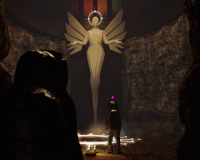
Fort Of Naughty World is a game built around structured exploration within a closed fortress environment that reacts to player behavior. From the beginning, the player is free to move but is given minimal explanation about how progress works. Advancement depends on learning how spaces, objects, and actions influence each other. The game does not rely on combat or speed-based mechanics, instead placing emphasis on awareness, memory, and logical sequencing. Every room serves a functional role within a larger system that gradually becomes clearer through interaction.
Fortress Layout And Environmental Logic
The fortress is designed as a connected network rather than a linear path. Rooms often link back to earlier areas, forming loops that encourage players to think about positioning and access rather than forward momentum. Some sections remain inaccessible until specific conditions are fulfilled, requiring players to remember locked paths and return later. This structure transforms navigation into a strategic task where understanding spatial relationships is essential for efficient progress.
Interaction Systems And Learning Process
Interaction in Fort Of Naughty World is based on experimentation and consistency. Objects behave according to rules that remain stable throughout the game, allowing players to build expectations over time. Actions taken in one location may influence another area entirely, sometimes with delayed results. In the central phase of gameplay, players frequently engage with mechanics such as:
- inspecting objects to understand their purpose
- activating mechanisms that modify room states
- opening or closing access points indirectly
- revisiting earlier locations with new context
- testing different action sequences to observe outcomes
This process reinforces learning through repetition and observation rather than instruction.
Progress Without Explicit Objectives
The game avoids traditional objectives, markers, or quest logs. Progress is defined by access rather than completion. When a new passage opens or an obstacle is removed, it indicates that the player has correctly applied the internal logic of the fortress. This approach supports multiple exploration styles and allows players to advance at different speeds without penalty.
Visual And Audio Feedback
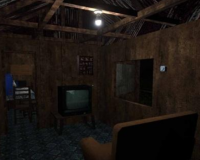
Visual design in Fort Of Naughty World focuses on clarity and distinction. Areas are visually unique, making them easier to recognize when revisited. Subtle changes in lighting or color often signal that an environmental state has changed. Audio feedback is minimal but purposeful, typically confirming that an interaction has produced an effect. These cues guide the player without explicit explanations.




























































Advertisement