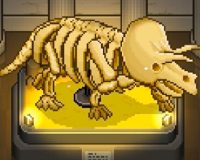
Fossil Quest is a simulation-oriented game focused on discovery, reconstruction, and long-term collection management. From the beginning, the player steps into a workflow that alternates between field excavation and indoor curation. There is no urgency imposed by timers or competition, and progress is shaped by repeated engagement with the same systems over time. Advancement comes from expanding knowledge and collection size rather than completing fixed story objectives.
Fieldwork And Excavation Process
Dig sites serve as the primary locations for active exploration. At these sites, the player carefully uncovers buried fossil fragments using basic tools and controlled movement. Each excavation area is laid out differently, requiring attention to positioning and choice rather than memorization. Fossils are not guaranteed on every attempt, which reinforces a methodical approach to exploration. The pace of fieldwork remains steady, allowing the player to focus on accuracy instead of speed.
Fossil Handling And Reconstruction
Recovered fragments must later be examined and assembled. Fossil reconstruction involves determining how individual pieces fit together, creating partial or complete skeletons. Not all finds immediately contribute to a finished exhibit, and some discoveries remain incomplete for long periods. This structure encourages ongoing excavation rather than quick completion. The reconstruction process emphasizes understanding form and structure instead of relying on automated assembly.
Regular progression is defined by repeated interaction with several key actions:
- traveling to dig locations
- uncovering and collecting fossil fragments
- assembling skeletal structures
- preparing fossils for placement
These steps form the core gameplay loop and remain consistent throughout the experience.
Museum Development And Display
The museum acts as a central space where discoveries are organized and displayed. Players choose how fossils are positioned and how much space each exhibit occupies. There are no performance ratings or visitor scores tied to layout decisions, allowing the museum to function as a personal archive rather than a management challenge. Visual growth of the museum reflects progress more clearly than numerical indicators.
The interface is designed to support both excavation and curation without clutter. Tools appear only when relevant, and information about fossils is presented clearly. Movement between fieldwork and museum tasks is straightforward, minimizing downtime. The design keeps attention on objects and placement rather than on menus or statistics.




























































Advertisement