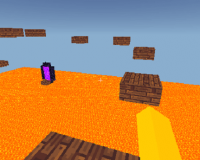
At first glance, Getting Over It appears simple: a man in a cauldron and a hammer, placed in a strange vertical world. There are no tutorials, no checkpoints, and no guidance on how to succeed. The player is expected to move forward using only physics-based movement and personal patience. Every action directly affects progress, and even a small mistake can undo several minutes of careful climbing.
Movement System And Core Challenge
The entire game is built around a single mechanic — controlling the hammer to push, pull, and swing the character upward. There are no alternative controls or upgrades to make things easier. Success depends entirely on understanding momentum, angles, and timing. The controls feel intentionally unforgiving, forcing players to learn through repeated failure. This design choice turns simple movement into the main challenge, rather than enemies or puzzles.
Key Elements That Define The Experience
Throughout the game, several mechanics shape how players interact with the environment:
- Physics-based movement with no assistance
- One continuous level without checkpoints
- Objects designed to punish rushed actions
- Precise mouse control as the only input
- Vertical progression that rewards patience
These elements work together to create tension. Progress feels earned, but loss feels sudden, making emotional control just as important as mechanical skill.
Narrative Through Frustration
Getting Over It does not tell a story in the traditional sense. Instead, meaning is delivered through commentary and player experience. The narrator speaks during moments of failure or progress, reflecting on persistence, frustration, and the nature of effort. These monologues do not guide the player but rather comment on the emotional state that the game creates. Over time, the experience becomes less about reaching the top and more about dealing with repeated setbacks.
Design Philosophy And Player Impact
The game intentionally rejects comfort features found in most modern titles. There are no saves, no difficulty options, and no shortcuts. This forces players to confront their own reactions to failure. Some quit early, while others push forward despite repeated setbacks. The design encourages self-reflection and patience rather than mastery through statistics or upgrades.
Getting Over It delivers a focused and unconventional experience built around a single idea. It challenges expectations of progression and reward by making frustration part of the gameplay. While not designed for everyone, it succeeds in creating a memorable experience that stays with players long after they stop playing. The game proves that simple mechanics, when used deliberately, can create a powerful and lasting impact.

























































Advertisement