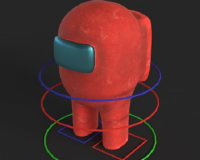
Impostor Online is a real-time multiplayer experience built around hidden roles and indirect competition. Players enter a shared space where objectives differ depending on their assigned role, but this information is never public. The match unfolds through movement, observation, and moments of discussion that interrupt active play. Rather than focusing on complex controls, the game places emphasis on interpretation and group decision-making.
Round Flow And Objective Balance
Each round follows a structured flow that alternates between free movement and collective decision points. During active phases, players spread across the map to complete objectives or observe others. The opposing role operates under the same visible rules but with different goals, creating overlap in behavior that makes identification difficult. This balance ensures that no action is automatically suspicious, which keeps uncertainty present throughout the round.
Player Behavior And Information Gaps
Information in Impostor Online is always incomplete. Players rarely have full visibility of events, and most conclusions are based on partial observation. Small details such as movement timing, location changes, or repeated patterns become important. Because the game does not provide automatic logs or confirmations, players must remember and interpret what they have seen rather than rely on system feedback.
- tracking where players move over time
- noticing changes in group behavior
- deciding when to act independently
- remembering events between discussions
- adapting to shifting group trust
Discussion Interruptions And Voting Logic
When a critical event is triggered, gameplay pauses and all players enter a discussion phase. At this point, success depends on communication rather than movement. Players exchange accounts of what they noticed, challenge inconsistencies, and attempt to influence the vote. Since statements cannot be verified directly, persuasion and clarity become decisive factors. Voting concludes the phase and permanently removes one participant, changing the balance for the rest of the match.
Map Layout And Interaction Design
Maps are designed to encourage both isolation and convergence. Objectives are distributed in a way that pulls players into different areas, while central routes increase encounters. This layout supports observation without forcing constant interaction. Environmental simplicity keeps focus on player behavior rather than navigation challenges.
































































Advertisement