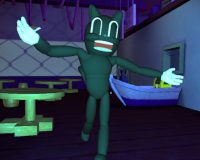
Jeff The Killer is a first-person survival horror game that places the player inside a confined location where escape is the only objective. The game begins without explanation, forcing the player to learn the situation through movement and observation. There are no combat options or guidance systems, and the environment provides limited information. Survival depends on understanding space, timing, and how the threat responds to player actions rather than on mechanical skill.
Player Position and Limited Control
The player’s role is defined by restriction. Movement is possible, but every step carries risk because the threat can appear with little warning. There are no tools that allow confrontation or long-term safety. Instead, the player must decide when to move and when to remain still. This lack of control establishes a consistent structure where the player reacts to the environment rather than shaping it.
Environmental Learning and Layout
The game world is built from a small set of interconnected rooms and corridors. These spaces repeat visually, which makes orientation difficult without careful attention. Over time, the player begins to recognize routes, dead ends, and temporary safe areas. Progress is tied to remembering how locations connect and which paths allow faster escape. The environment becomes a system to learn rather than a place to explore freely.
At the midpoint of gameplay, the player regularly focuses on:
- memorizing room connections
- choosing safe movement timing
- avoiding areas with limited exits
- using objects or spaces for brief concealment
- finding items that unlock progression
Threat Pressure and Encounter Design
The threat does not follow a fixed pattern, which prevents reliance on scripted behavior. Its presence is often suggested through sound or sudden changes in the environment. Encounters are brief and decisive, usually ending the attempt if the player fails to react correctly. This design reinforces caution and repetition, as each failed run provides information about what actions increase risk.
Progression requires entering dangerous areas to retrieve items or trigger events. These actions expose the player to greater risk but are necessary to move forward. There are no side objectives or alternate routes that reduce danger. Each step toward completion demands commitment, and hesitation can be as harmful as rushing. The structure rewards learning through repeated attempts rather than experimentation with mechanics.






















































Advertisement