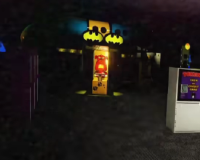
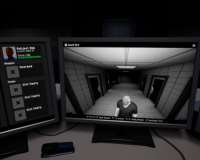
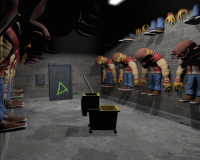
Made a Self-Aware Robot Escape is a compact puzzle-focused game built around the idea of autonomy emerging inside a controlled system. The player guides a robot that begins its existence performing predefined routines within a closed facility. Over time, interaction with the environment reveals opportunities to act beyond those routines. The game does not frame this shift through direct narration, instead letting the player experience it through mechanics and gradual access to new spaces.
Facility Layout And Restrictions
The setting is a structured environment composed of interconnected rooms, corridors, and functional zones. Each area is governed by restrictions such as locked doors, inactive systems, or missing components. These limitations define early movement and reinforce the sense of containment. The layout encourages careful observation, as many areas can be revisited later with new understanding. Progress is not linear, and the facility slowly opens as the player learns how its systems respond to interaction.
Player Interaction And Core Loop
Gameplay revolves around exploration and manipulation rather than speed or accuracy. The robot moves at a steady pace and interacts with objects through simple commands. There are no combat encounters or time limits, keeping focus on logic and cause-and-effect relationships. During play, the player repeatedly engages with actions such as:
- activating terminals and control panels
- repositioning objects to alter pathways
- triggering environmental responses
- revisiting earlier areas with new context
This loop forms the basis of progression, where knowledge replaces upgrades.
Puzzle Structure And System Logic
Puzzles are integrated directly into the environment rather than presented as separate challenges. Many problems rely on understanding how different systems influence one another. A solution in one room may affect access elsewhere, encouraging players to think in terms of systems instead of isolated tasks. Feedback is subtle but consistent, allowing players to test ideas and refine their approach without explicit hints.
Narrative Through Environment
Story elements are embedded in visual details, system messages, and changes in facility behavior. Rather than explaining why the robot becomes self-aware, the game implies this development through interaction and access. The absence of dialogue keeps attention on interpretation, letting players decide how much meaning to assign to each discovery. The environment itself functions as the primary storytelling device.
Progression And Player Experience
Advancement in Made a Self-Aware Robot Escape is measured by expanded freedom rather than completion metrics. There are no scores, ranks, or failure penalties. Players are encouraged to experiment, backtrack, and reassess earlier assumptions. Replay value comes from testing different interaction orders and noticing details missed before. The experience emphasizes understanding and independence, presenting escape not as a single objective but as the result of accumulated insight.






















































Advertisement