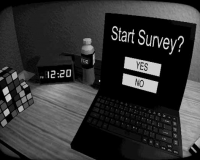
Pawn Shop is a first-person simulation where the player takes control of a small store that buys items from customers. The gameplay is structured around a sequence of transactions that take place during isolated shifts. Each customer presents an object, and the player must decide whether to accept the deal based on limited information. The system does not provide clear pricing rules, so outcomes depend on individual judgment.
Item Evaluation Process
The main activity in Pawn Shop is examining items before making a purchase. Players observe visual details such as condition, type, and possible defects. There are no fixed indicators of value, which requires building an internal understanding of what should be accepted or rejected. Early stages introduce common objects to establish the basic logic of transactions.
As the game progresses, items become less predictable. Some may appear unusual or inconsistent with normal expectations. The player must decide whether these objects represent an opportunity or a potential loss.
Financial Control and Decisions
The shop operates with a restricted budget that must be managed across multiple interactions. Each accepted item reduces available funds, while rejected offers do not contribute to progress. The balance between risk and stability becomes a central part of the experience.
Typical actions during gameplay include:
- reviewing each item presented by customers
- estimating value without predefined rules
- choosing whether to complete a transaction
- monitoring remaining budget after purchases
- continuing the shift based on prior decisions
This loop defines how players move forward through each session.
Increasing Complexity
Pawn Shop gradually introduces changes that affect both gameplay and perception. The environment may shift subtly, and customer behavior can become less consistent. These elements require players to remain attentive, as standard patterns may no longer apply.
The game does not interrupt the core loop but instead modifies it through small variations. This approach maintains the original structure while adding new layers of uncertainty.
Session Outcomes and Variability
Each playthrough in Pawn Shop can lead to different results depending on how decisions are made. Item order, customer interactions, and environmental changes are not identical across sessions. This variability requires players to adapt rather than rely on memorization.
The overall design emphasizes repetition with variation. Players refine their approach by improving observation and decision-making, while the game continues to introduce new conditions that affect the outcome.




























































Advertisement