Advertisement
Scary Shawarma Kiosk: the ANOMALY


Scary Shawarma Kiosk: the ANOMALY places the player behind the counter of a small night kiosk where routine food preparation slowly gives way to irregular events. The shift begins with simple actions such as slicing ingredients, heating the grill, and assembling shawarma orders for customers. The kiosk is designed to feel familiar, but the environment changes in ways that require careful observation. What starts as a straightforward job becomes a sequence of tasks interrupted by moments that do not match normal conditions.
Rules, Timing, and Shift Organization
Each shift in Scary Shawarma Kiosk: the ANOMALY is built on a set of rules that determine how the player must react to different situations. These rules explain how to serve customers, maintain equipment, and respond to anomalies. Some rules apply throughout the entire shift, while others activate only at specific times. Because the game mixes predictable tasks with irregular events, the player must manage both speed and attention, ensuring that no instruction is overlooked.
Tasks That Structure the Shift
Throughout the night, the player handles several responsibilities that shape the overall flow:
- Preparing shawarma according to the required sequence
- Checking the behavior of incoming customers
- Reacting to environmental changes inside the kiosk
- Monitoring audio cues that signal anomalies
- Reviewing updated rules before each shift begins
These tasks combine into a pattern that becomes more complex as new anomalies appear.
Customer Flow and Anomaly Indicators
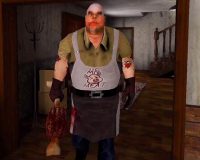
Customers form the main interaction in Scary Shawarma Kiosk: the ANOMALY. Most follow a predictable routine: they arrive, request food, and wait for their order. However, some arrivals display signs that something is not normal. They may appear at the wrong time, stand silently without requesting anything, or move in a way that does not match typical behavior. Identifying these signals is essential, since failing to treat an anomaly correctly results in an immediate end to the shift.
Player Progression and Developing Awareness
As the player continues through multiple shifts, recognition becomes the main skill. Early attempts often involve reacting to everything at once, but repeated play reveals patterns that help distinguish routine events from anomalies. The player learns when customers usually arrive, how equipment behaves during normal operation, and what signals indicate a change in the environment. This gradual improvement forms the core progression system of the game.
Long-Term Appeal and Community Interaction
Scary Shawarma Kiosk: the ANOMALY maintains interest by offering consistent structure with unpredictable elements. No two shifts unfold in exactly the same way, which encourages players to experiment, retry, and compare experiences. Many share strategies, discuss unusual anomalies, and exchange theories about the rules governing the kiosk. The combination of repetition, challenge, and discovery gives the game long-lasting appeal and keeps players returning for new shifts.





























































Advertisement