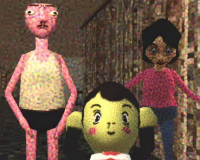
The Man You See presents a short interactive story about a person who relocates to a different town after an unresolved breakup. The game starts with simple tasks that reflect the attempt to rebuild daily structure, but the process gradually becomes unsettled. As the player explores the apartment and the surrounding locations, it becomes clear that the protagonist’s thoughts and experiences do not fully match the environment. This mismatch drives the narrative forward without direct explanations.
Early Exploration and Narrative Flow
The first minutes of the game introduce basic interactions that resemble a routine move-in process. You unpack, navigate narrow spaces, and encounter objects that hold small traces of the protagonist’s past. These details set a foundation for the story while keeping everything grounded in practical actions. As the player moves between scenes, the game uses short transitions and minimal dialogue to show how the protagonist interprets new surroundings. This form of storytelling creates space for uncertainty without relying on external commentary.
Key Elements Appearing Midgame
Closer to the middle of the experience, the game begins to shift focus from relocation to internal conflict. The world reacts in ways that are not directly threatening but raise questions about perception. During this phase, players commonly notice:
- brief distortions in familiar rooms,
- figures positioned in unexpected places,
- changes in lighting that do not follow clear logic,
- interactions that feel incomplete or interrupted,
- scenes that return with slight modifications.
These elements appear naturally within the playthrough, encouraging the player to reconsider earlier assumptions about the protagonist’s stability.
Building Toward Resolution
As progression continues, the line between memory and present time becomes unclear. Locations the player previously visited start representing emotional states rather than simple settings. The protagonist’s attempt to maintain control becomes more complex, as everyday actions highlight unresolved issues. Instead of expanding the world, the game uses repetition and small alterations to suggest that the struggle is internal. This approach keeps the experience compact but allows each moment to carry weight.
Closing Perspective
The Man You See concludes with a sequence that leaves open space for interpretation. The final scenes do not provide a clear answer but offer a framework for understanding how the protagonist’s past influences their perception of the new town. The game’s short length supports a focused narrative that examines how personal history shapes present experience. Its structure encourages the player to reflect on the outcome rather than seek a definitive explanation.

































































Advertisement