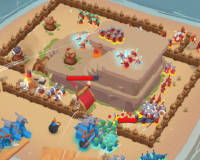
TheoTown is a city management game where the player oversees the growth and operation of urban areas. The experience focuses on planning land use, providing services, and maintaining balance between income and expenses. Cities begin with limited infrastructure and expand as population increases. There is no scripted campaign, and players define goals through development choices and long-term stability.
Land Use And Demand Management
Urban expansion in TheoTown is driven by zoning and demand systems. Players allocate land for residential, commercial, and industrial purposes, and these zones influence population flow and employment. Demand indicators guide when to expand each zone type, but placement and connectivity determine efficiency. Roads are required to connect zones, and distance to services affects growth rates. As cities grow, earlier zoning decisions can create bottlenecks, making adjustments necessary rather than optional.
Utilities, Transport, And Public Coverage
Sustaining a growing city requires reliable utilities and transport. Power plants, water facilities, and waste services must reach all active zones to prevent decline. Transport networks reduce congestion and improve access to workplaces and services. Public buildings such as hospitals, schools, police stations, and fire departments influence safety and health metrics. Budget management is continuous, as construction and maintenance costs rise alongside tax revenue.
Routine Actions And City Operations
Managing a city in TheoTown involves repeating operational tasks that respond to changing conditions. Players commonly perform actions such as:
- expanding residential, commercial, and industrial zones
- upgrading and rerouting road networks
- extending electricity and water coverage
- placing public services to meet coverage gaps
- monitoring budgets and adjusting tax rates
These actions form a steady loop that scales with city size and complexity.
Dynamic Issues And Response Planning
Cities in TheoTown face dynamic issues related to layout and coverage. Traffic congestion, pollution, fires, and health problems can emerge when systems are stretched. These issues are linked to planning choices rather than random events. Addressing them may require rebuilding sections of the city or reallocating funds. The game encourages incremental improvement, where stability is achieved through ongoing adjustments instead of rapid expansion.
Open-Ended Play And Long-Term Use
TheoTown operates as an open sandbox without a final objective. Players can manage multiple cities across different maps, each presenting unique terrain constraints. The ability to install plugins adds buildings and mechanics, extending available options. Long-term engagement comes from refining layouts, testing alternative strategies, and maintaining cities over extended periods. The structure supports repeated sessions with evolving challenges rather than a defined endpoint.



























































Advertisement