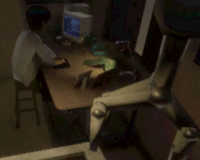
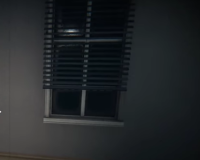
Trick or Treat begins with Michael arriving at his family home during Halloween night. The house stands ready for the holiday, decorated and organized, yet something feels detached from the celebration around it. The player steps into Michael’s role, completing small domestic actions such as answering the door, tidying rooms, and speaking with visitors. These actions appear ordinary but slowly reveal fragments of a story that do not align. Each new interaction introduces uncertainty about what is real and what belongs only to memory. The setting remains fixed, but the meaning of each room shifts with every exploration.
Story Progression
The narrative structure of Trick or Treat unfolds through repetition and discovery. The player receives no direct exposition or objectives. Instead, the story builds from routine: the same door knocks, the same voices, the same tasks repeated with small variations. Over time, differences emerge in tone and behavior. Dialogue changes slightly, objects move position, and sounds echo differently. The lack of external conflict directs attention inward, turning the experience into a process of quiet investigation. The story’s meaning is formed not by what is said but by what changes between moments that seem identical.
Core Gameplay
Trick or Treat relies on simple, consistent mechanics that emphasize observation and pacing:
- Exploration of the house by moving through accessible rooms.
- Interaction with objects to trigger dialogue or hidden responses.
- Conversations with visitors that may alter subsequent events.
- Multiple loops that adjust based on order and timing of actions.
These mechanics give structure without distraction. The player’s task is not to win or escape but to interpret the situation. Each decision subtly rearranges how the narrative presents itself, allowing recognition of details that were previously unnoticed.
Character Focus
Michael remains the only stable figure in Trick or Treat. The visitors who appear at the door vary in tone, speech, and consistency, creating ambiguity about their identity. Some speak as if they know him, others treat him like a stranger. The player must decide how to respond, though no clear path exists. This use of dialogue as both tool and test deepens the sense of isolation. The characters act as mirrors, reflecting fragments of memory or imagination. Through interaction, the player uncovers a pattern of relationships that never fully resolves, reinforcing the game’s focus on perception rather than closure.

























































Advertisement