Advertisement
We Become What We Behold


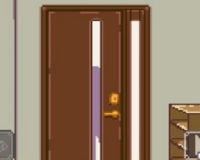
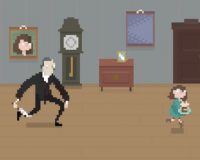
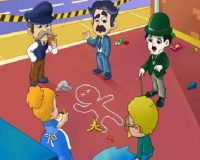
We Become What We Behold is a short interactive game that explores how attention and repetition shape behavior within a closed social system. The player is placed in control of a camera and observes a small group of characters living in a confined public space. At the beginning, interactions appear neutral and repetitive, with no clear objective beyond observing daily movement. The act of framing moments through the camera becomes the only form of influence, and the player’s role is defined by what is chosen to be recorded rather than what is ignored.
Observation As Interaction
The primary mechanic in We Become What We Behold is the act of selecting moments to capture. The camera does not change events directly, but the focus placed on certain actions causes them to spread. Small gestures or reactions become more common once they are highlighted. The player quickly learns that attention itself functions as a tool, shaping patterns without direct control. There are no scores or timers, only the accumulation of visible change within the group.
Escalation Through Repetition
As the game continues, recorded behaviors begin to dominate the environment. Characters adjust how they act based on what has been repeatedly observed and shared. The system does not distinguish between positive or negative focus, treating all attention as equal. The player is encouraged to notice how repetition creates feedback loops. Core actions during this stage include:
- choosing which interactions to record
- deciding when to wait instead of filming
- observing changes in group behavior
- recognizing patterns created by repetition
- responding to shifts without direct input
These actions shape the pace and direction of escalation, even though the player never issues commands or instructions.
Minimal Controls And Clarity
The simplicity of controls reinforces the game’s message. With no complex mechanics, the player cannot distract themselves from consequences. Each choice feels small in isolation, but the results accumulate. The lack of explicit explanation forces the player to infer meaning from outcomes rather than instructions. This creates a space where responsibility is implied rather than stated.
As tensions increase, the environment becomes less stable. Characters react more strongly, and neutral behavior becomes rare. The player is not offered a way to reverse changes, only to continue observing. This limitation emphasizes how difficult it is to interrupt patterns once they become established.




























































Advertisement